


Mishimoto® (23-25) NIssan Z 8 oz PCV Side Baffled Oil Catch Can Kit
Mishimoto® (23-25) NIssan Z 8 oz PCV Side Baffled Oil Catch Can Kit is backordered and will ship as soon as it is back in stock.
Question? Call us at (888) 257-1077 🏁 (M-F 9-5 ET)
Email: info@10SecondRacing.com (24/7)
Free Shipping to Lower 48 US States ($100+)
Worldwide Shipping via UPS (Check Rates at Checkout)

Mishimoto® (23-25) NIssan Z 8 oz PCV Side Baffled Oil Catch Can Kit

Description
Description
COMPATIBLE: (3.0L - VR30DDTT)
2023 - 2025 NISSAN Z RZ24

The new 2023+ Nissan Z is one of the most coveted sports cars available. With a lineage of performance stretching back over 50 years, the Z combines decades of performance pedigree with modern tech to create a formidable driving machine. But not every part of the Z has been perfected over the last six generations. The powerful VR30DDTT is equipped with twin turbos, a direct injection fueling system, and a high compression ratio, resulting in the perfect storm for blow-by.
Over time, sneaky blow-by can gum up and leave a hardened coating on your valves, compromising the performance and efficiency of your engine. Luckily, the Mishimoto 2023+ Nissan Z PCV Side Baffled Oil Catch Can will capture and collect blow-by before it reaches your intake tract. Installed in line with the VR30DDTT's PCV system, this 2-port compact catch can features a 50-micron fiber bronze filter and an air diverter baffle that intercept oil particles before they reach the crankcase and other vital components, leaving nothing but clean air for your intake system.
Unlike most air-oil-separator (AOS) systems, Mishimoto catch cans are not heated and don't drain blow-by back into the oil pan. These factors allow blow-by, including low-octane oil vapors, to condense in the can and drip into the canister, keeping it out of the engine permanently. This can is also fully washable and includes a slotted mounting screw, making servicing a breeze.
The kit comes with everything needed for install, including a direct-fit steel powder-coated bracket, pre-formed application-specific hoses, billet 6061-aluminum can with black CNC-machined aluminum fittings, and all required hardware for a clean and easy installation. As with all our products, this 2023+ Nissan Z catch can kit is backed by our signature Mishimoto Lifetime Warranty!
| HEIGHT (IN) | 3.7 |
|---|---|
| CATCH CAN DIAMETER (IN) | 2.5 |
| INLET | M16x1.5 |
| OUTLET | M16x1.5 |
| DRAIN PLUG THREAD SIZE | 3/8-NPT |
| APPLICATIONS | 2023+ Nissan Z |
| ENGINE CODES | VR30DDTT |
| CHASSIS CODES | RZ34 |
| INSTALLATION NOTES |
22 in-lbs (2.5NM) recommended for all worm-gear clamps. These clamps have an operating range of 18-27 in- 2-3NM. Do not exceed the maximum torque rating of 27 in-lbs (3NM)
|
It’s almost 2023, and Nissan’s latest sports coupe carrying on the legendary Z lineage is finally here. Like every other enthusiast, we let out an exasperated “Finally…” hearing the news of dealer allocations. It’s been 13 years since we had a new Z car, and while the 370 certainly held the namesake in a strong standing, it was about time for a new era of Z before charging into the electrifying future. This Z might be the shining beacon of fresh sports car design, but Nissan’s latest offering is a compilation of their greatest hits. There are, of course, the classics, like the 300ZX taillights, signature silhouette, and hood cowl dating back to their Datsun days, but one of the main draws is the recent B-side that’s under the hood, a little ditty called the VR30DDTT. In this case, it’s a cover, but the Z made this tune its own with 400hp and, much to the superfan’s joy, a manual transmission option. Unfortunately, this heavy-hitting power ballad of an engine still falls under the same trope of carbon build-up from blow-by.
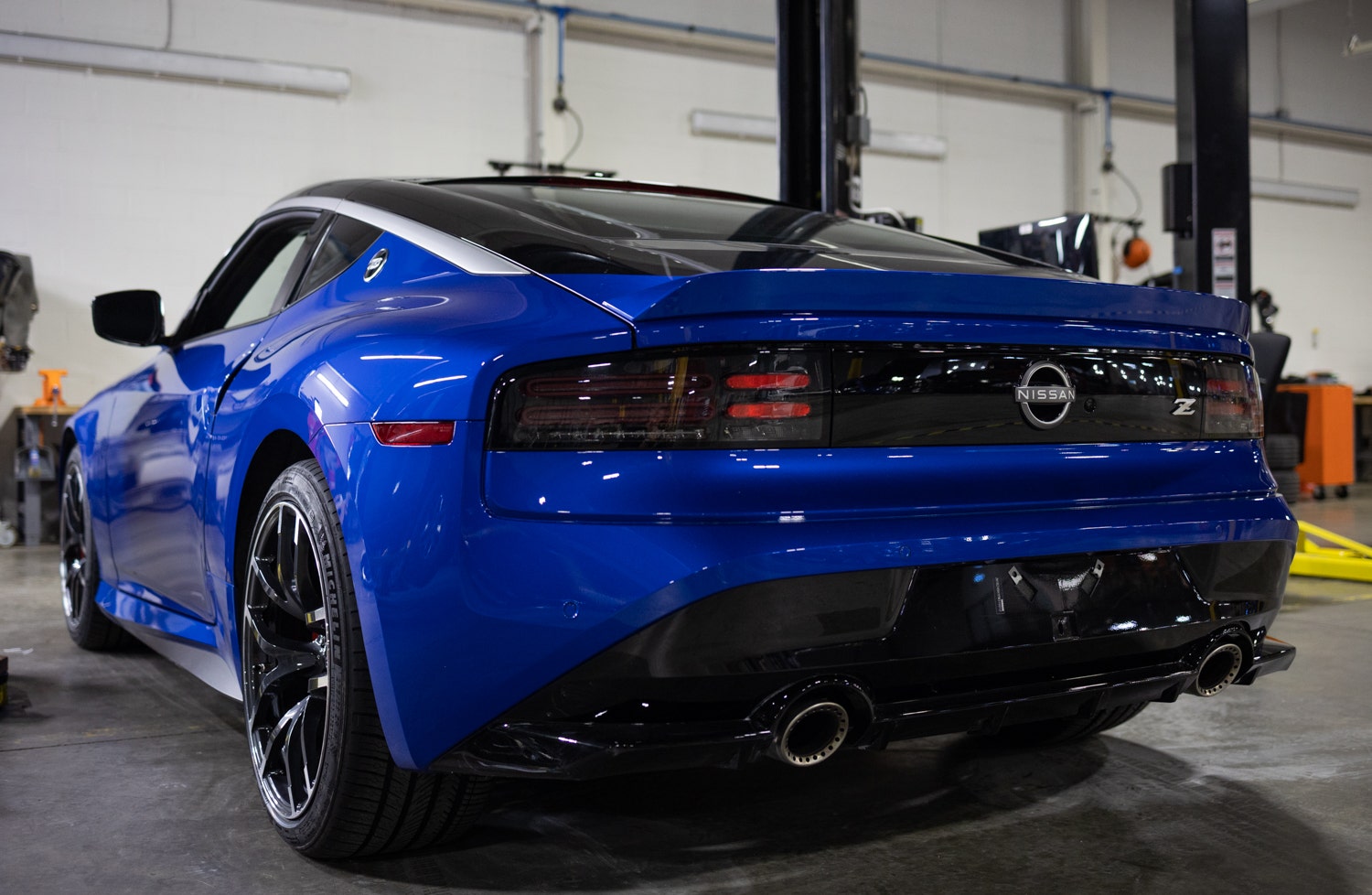
If you’re scratching your head at the thought of blow-by, carbon build-up, and what those have in store for your 3.0T-powered Z’ future, let’s review. Blow-by is an inherent by-product of the internal combustion engine. No matter the advancements made in engine design, this symptom is inevitable. During the power stroke of the engine’s cycle, some combustion gasses slip past the piston rings and into the crankcase instead of evacuating through the exhaust valves. These rogue gasses are much more motivated to find their way to the crankcase on engines with higher compression ratios, forced induction, or a combination of both in the case of the VR30. This added gas in the crankcase causes additional pressure that could cause ruptures in your engine’s bottom end if gone unchecked. Luckily, the OEM engineers had a fix for this, which comes in the form of a one-way check valve that vents this pressure, also known as the positive crankcase ventilation, or PCV, system.
In the olden days of crankcase ventilation, this pressure would be released right out the side of the engine block, along with the oil and fuel vapors that were also making their daring escape. Since venting to atmosphere isn’t the ideal solution for the lifespan of this big ecosystem we call Earth, the OEMs opted to keep things clean. So instead, these gasses were routed back through the intake system to be burnt off in the next cycle.
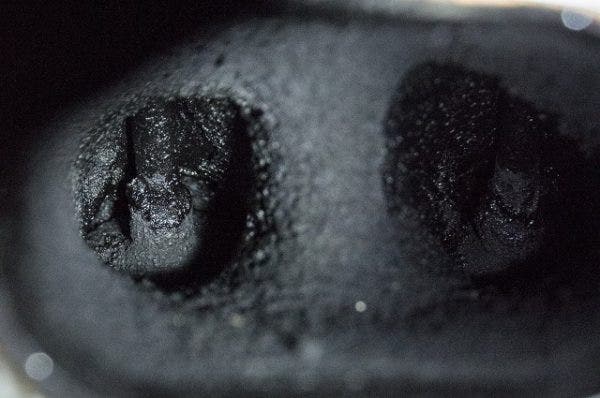
While this is a much cleaner system, there’s still a downside. The crankcase pressure routing back into the intake carries unburnt fuel vapors and oil droplets, which we call blow-by. The mixture of these substances tends to stick to intake components, especially the valves. Over time, blow-by essentially coagulates into a hardened coating that can cause these valves to either not open fully or stick open, ultimately robbing your Z of power and efficiency. The circumstances are especially dire for the direct-injected VR30 since there’s no longer a constant stream of detergent-rich fuel washing over the valves slowing the spread of carbon build-up.
So, what can you do to preserve the punch twin-turbo V6? We’re glad you asked. Catch cans are the ideal remedy for the internal combustion engine’s chronic illness. Our compact catch cans create a small expansion chamber and utilize a baffle, allowing this blow-by-riddled crankcase pressure to condense and collect inside the can instead of in the intake tract.
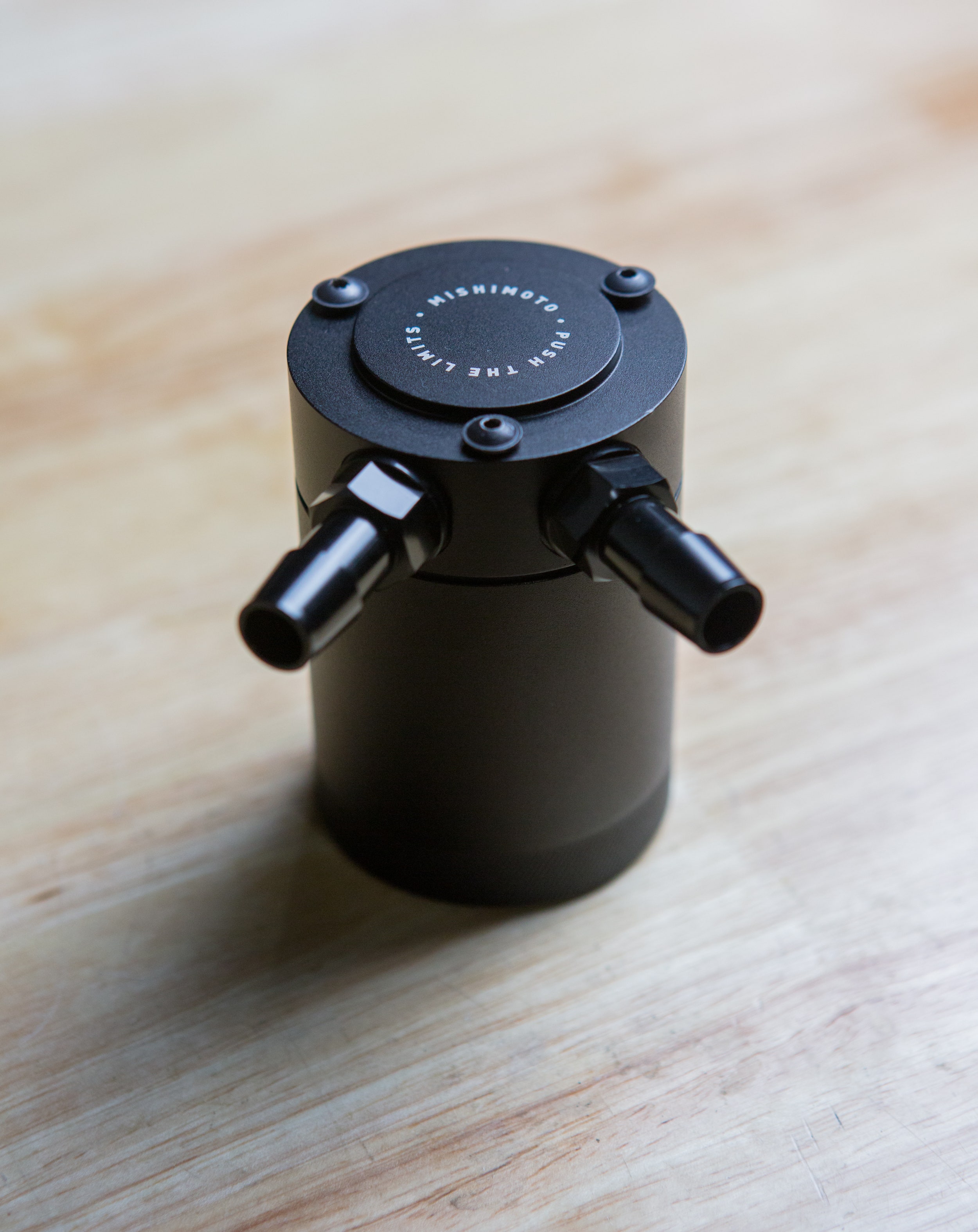
With that in mind, we now needed to adapt our tried-and-true design to this latest Z. Even with our old friend making an appearance under the sports car’s hood, we still needed to fire up our 3D scanner for new design work. From outward appearance, this engine bay is almost identical to the Q-series Infinitis. Still, the re-homing to the Z incurred some updates to the design and placement of some components. Specifically, Nissan rerouted their AC lines directly in the path of our current catch can placement, so our engineer, Ye, got right to work.
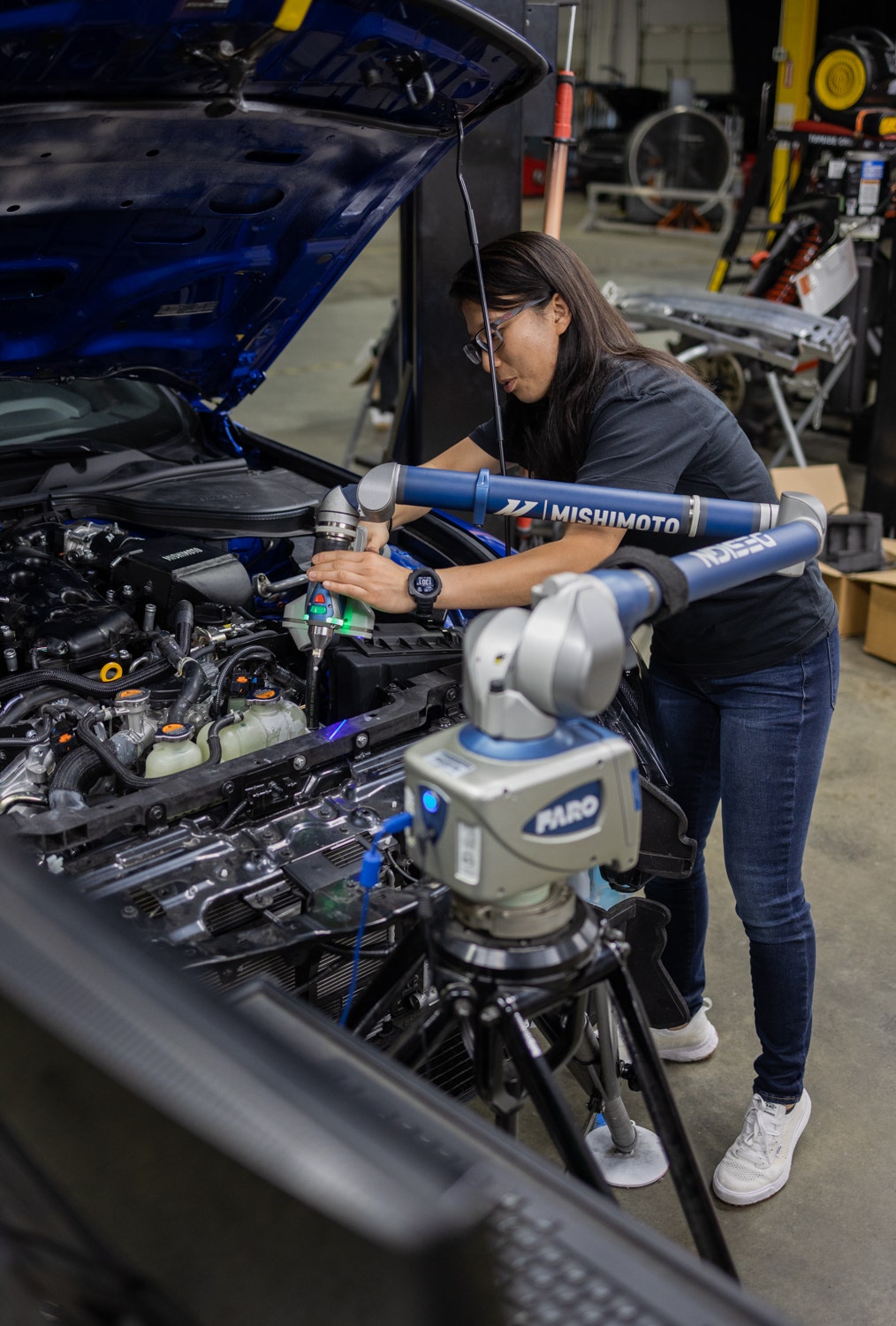
One of the cult classics that made its way onto this greatest hits album is “Cramped Engine Bay,” which is, admittedly, our least favorite track. Like all Nissans and Infinitis that came before, this Z shares the same tightly packed engine bay that leaves limited alternatives for catch can mounting locations. However, after exploring the engine bay, Ye spotted an opening between the right-side airbox and the coolant reservoirs that might as well have been made for our catch can.
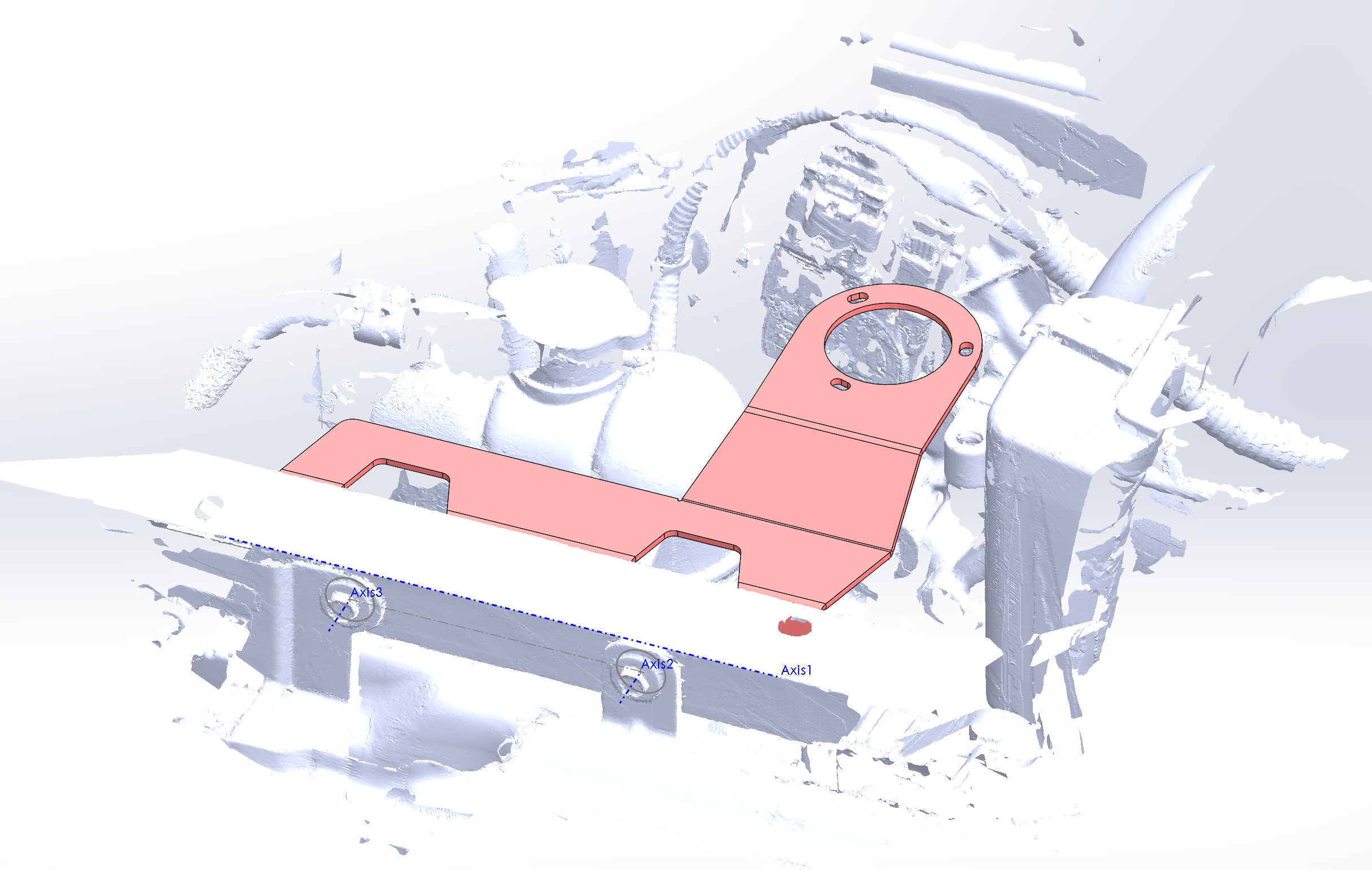
Utilizing a pair of open mounting points, Ye combined her engineering prowess with the scale digital replica of our donor Z’s engine bay to create the first draft of our mounting bracket. We plan to cut and bend this bracket from 2.5mm thick steel for a secure home for this catch can.
Linking our compact catch can into the VR30DDTT’s PCV system will be a cinch. There might have been a long list of updates for this engine to live up to Z car standards, but the PCV ports remained constant. With our new mounting location, the lines to and from the ports are almost in a direct line with our can, so Ye only needed to incorporate a few short bends to navigate through the maze of coolant lines.
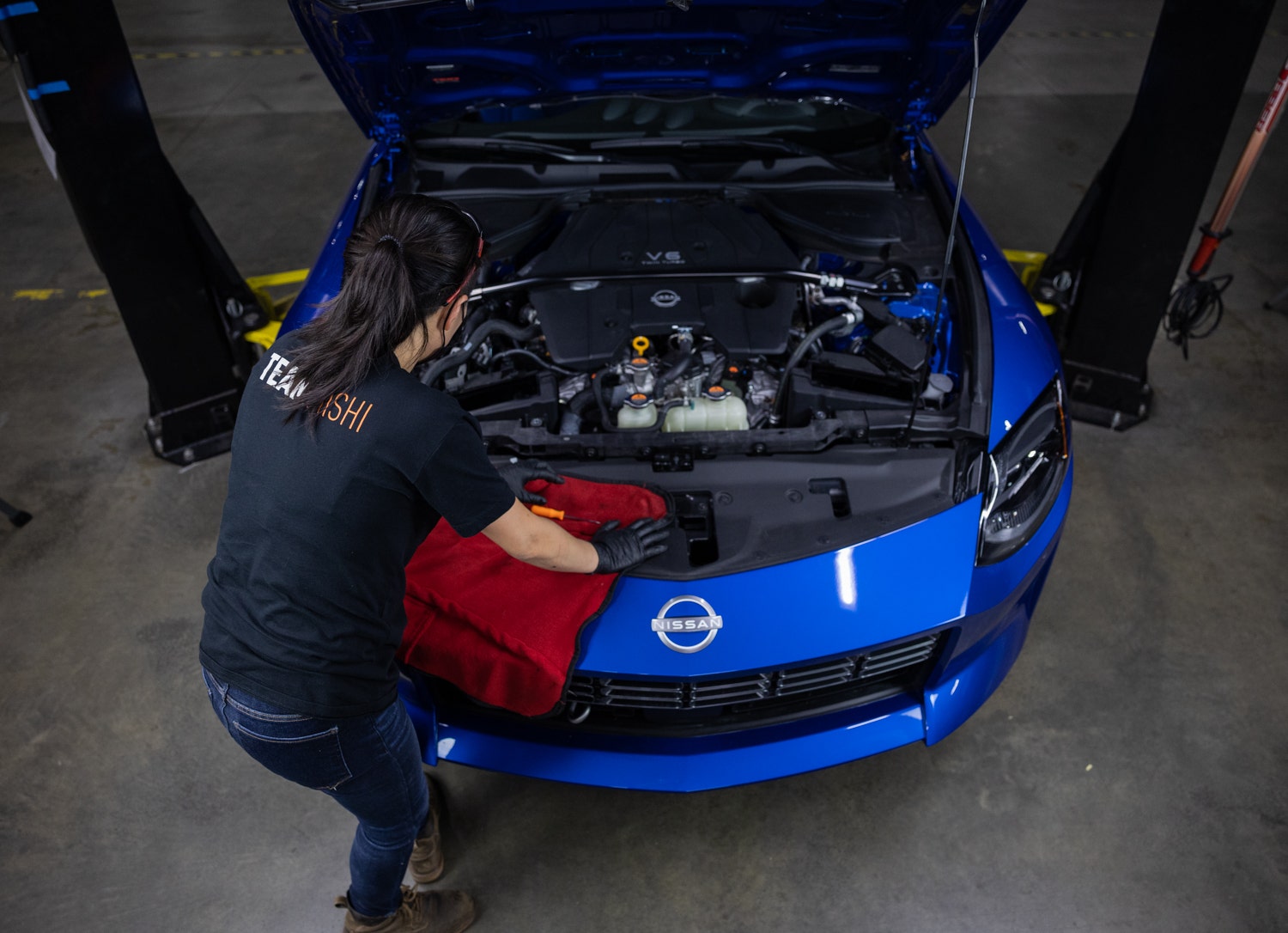
Like any compiled tribute to days passed, Nissan’s latest sporty offering is about preserving the lively history of all things Z. The culmination of their greatest hits combined creates the living embodiment of the company’s long-standing heritage, but it could also use some preservation itself. So keep an eye out for our next post, where we’ll bring our design to life in prototype form.
Instant classics don’t typically happen instantly. Think about all of those songs that immediately get stuck in your head. Instead, these earworms wriggle their way into your unconscious because they’re so expertly crafted. They’re demoed, recorded, have their composition changed, re-recorded, and rigorously dissected before they make their way to your Spotify playlists. Nissan’s Z cars follow a similar path. While the Z hasn’t been singing the same song for the last 53 years, it’s become a staple in the genre. Now, half a century later, these sports coupes have built quite the legacy and are preserving their heritage in their latest release that captures the Z’s essence. We’re super fans here at Mishimoto, and we’re hard at work preserving that legacy.
This Z is a rockstar, thanks to the VR30DDTT nestled under the hood, and we want to give it the VIP treatment. Protecting this engine’s intake tract from the dangers of blow-by is a song that we already know, but this time around, we’re switching things up. We’re changing the arrangement and maybe experimenting with some similar genres. To make sure it all meshes properly, we need to record some demos or, in engineering terms, make a prototype.


With our 3D model finalized, we can easily bring our catch can bracket to life with the help of our waterjet and press at the skilled hands of our shop tech, Josh. This uncoated prototype may not look complete, but by fabricating this bracket in our R&D facility, we can streamline our development process by triple-checking our work before kicking off production.

Integrating our catch can into the VR30’s PCV system is something that we’ve already rehearsed. Routing the catch can lines through the maze of OEM fluid and air piping was already plotted during our development on the Q50/Q60 catch can kit, but the composition is changing for this recording session. Since we’re mounting our can to the radiator support rather than the intercooler bracket, we revised our lines to the appropriate length and added a few bends to start the journey.
With our prototype set and design finalized, we’re ready to hit the recording studio for our final production. Make sure that you stay tuned for the first look at our final design coming soon!
Install Guide:


Warranty:

